Saturday February 28, 2009- theStar
Islamic finance still fares better than conventional system
ISLAMIC financial markets are not as badly affected by the global financial crisis as their conventional counterpart due to its unique structure, says MAA Takaful Bhd director Dr Zaha Rina Zahari.
“Fortunately, Islamic finance is structured in a more transparent and tangible way. You are not betting on something that is not real (intangible).
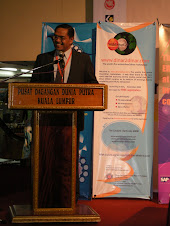
“It (Islamic finance) will be affected but probably to a lesser extent than the conventional market,” she said after the launching of Islamic Finance Encyclopaedia by Securities Commission chairman Datuk Seri Zarinah Anwar in Kuala Lumpur yesterday.
Besides, interest rates per se in the conventional market do not affect the Islamic financial system directly, as the Islamic principle is not based on interest rates but the value of assets, says Monash University business school (banking and finance unit) director Prof Bala Shanmugam.
Interest rates, however, have an indirect impact, he adds.
“Islamic finance is based on asset value, and the value of asset changes with interest rates because we live in a conventional system,” he says.
Meanwhile, Zaha Rina says the global Islamic financial services industry has experienced spectacular growth over the last four decades due to greater awareness, understanding of syariah-compliant instruments and demand for an alternative market.
“It is today a US$1 trillion industry and is still growing at an average rate of 15% (per annum),” she says, quoting figures from the Islamic Financial Services Board.
Zaha Rina co-authored Islamic Finance Encyclopaedia with Prof Bala and Monash University business school assistant lecturer Nafis Alam. All three are individuals renowned in their respective fields.
The 600-page publication, which lists a full compilation of Islamic finance terms, structures, scholars and industry practitioners, took two years to compile. About 200 copies have been sold and the authors plan to sell the encyclopaedia overseas.
Saturday, February 28, 2009

CREDIT-CARD CHARGES: These fees are not acceptable
NST Online » Letters
2009/02/27
CREDIT-CARD CHARGES: These fees are not acceptable
By : C.S., Seremban
WITH reference to the letter from C.G.M. of Kuala Lumpur ("Banks squeezing customers again" -- NST, Feb 23) on credit-card charges, I agree it's unacceptable for banks to levy such administrative fees for overseas transactions.
It's not like actual costs, such as postage, which are to be reimbursed. In this day and age where transactions are conducted electronically, there is no reason for these companies to impose this charge.
I hope Bank Negara and any other party that regulates this industry will step in and set the matters right.
2009/02/27
CREDIT-CARD CHARGES: These fees are not acceptable
By : C.S., Seremban
WITH reference to the letter from C.G.M. of Kuala Lumpur ("Banks squeezing customers again" -- NST, Feb 23) on credit-card charges, I agree it's unacceptable for banks to levy such administrative fees for overseas transactions.
It's not like actual costs, such as postage, which are to be reimbursed. In this day and age where transactions are conducted electronically, there is no reason for these companies to impose this charge.
I hope Bank Negara and any other party that regulates this industry will step in and set the matters right.
Wednesday, February 25, 2009
Gold dinar can boost our reserves
NST Feb 22.2009
Gold dinar can boost our reserves
Kuala Lumpur:
Malaysia can increase the value of its national reserves if bank Negara converts its international reserves to the gold dinar from foreign currency.
Malaysia can obtain as much as RM162.6 billion this year if the reserves were in the form of gold dinars following the rise in the rise of gold.
If we follow the current value, one gold dinar is worth RM518 with the lowest value being one dirham (RM5), said Datuk Husam Musa of Kelantan executive councilor at the gold dinar seminar 2009 in University Malaysia yesterday.
The price of one gold dinar this year increased 11.07 percent to RM512.20 compared with RM461.15 last year.
The present global economy was too dependant on the current system and reports show bank negara’s international reservers kept in the form of gold, constituted only 0.4 per cent compared with US dollars last year.
The gold dinar could be an alternative means of settling the economic crisis because of its stable nature.”
UM vice-chancellor Prof Datuk Dr Ghauth Jasmon said the use of the gold dinar needs to be exposed to university students early so that people would be aware that it was an alternative to currency.
Gold dinar can boost our reserves
Kuala Lumpur:
Malaysia can increase the value of its national reserves if bank Negara converts its international reserves to the gold dinar from foreign currency.
Malaysia can obtain as much as RM162.6 billion this year if the reserves were in the form of gold dinars following the rise in the rise of gold.
If we follow the current value, one gold dinar is worth RM518 with the lowest value being one dirham (RM5), said Datuk Husam Musa of Kelantan executive councilor at the gold dinar seminar 2009 in University Malaysia yesterday.
The price of one gold dinar this year increased 11.07 percent to RM512.20 compared with RM461.15 last year.
The present global economy was too dependant on the current system and reports show bank negara’s international reservers kept in the form of gold, constituted only 0.4 per cent compared with US dollars last year.
The gold dinar could be an alternative means of settling the economic crisis because of its stable nature.”
UM vice-chancellor Prof Datuk Dr Ghauth Jasmon said the use of the gold dinar needs to be exposed to university students early so that people would be aware that it was an alternative to currency.
Tuesday, February 24, 2009
Govt can act as banker
WEB EDITION :: Local News
Govt can act as banker, says Mahaleel
KUALA LUMPUR (Feb 24, 2009) : The government can act as a banker by giving out loans to the public to address the issue of banks limiting their lending, said Tengku Tan Sri Dr Mahaleel Tengku Ariff ( pix ), the independent, non-executive director of Nestle (M) Bhd.
Mahaleel, who is also a visiting professor of the School of Management, Universiti Sains Malaysia, said the government could set a fund.
"There is no law to say that the government cannot be a banker," he told reporters after presenting his paper at the seminar on "Riding the Global Economic Storm: Tips for Malaysian Businesses" here today.
Mahaleel said the lending issue needed to be dealt with first so as to spur economic activities, particularly in motor vehicle and construction industries.
He said the proposal to allow owners of cars that were 15 years or older to claim a RM5,000 discount for the purchase of a new car was "a step" but it did not address the core issue.
"The root problem is that banks are not lending and the people's buying power or the ability to repay, has been reduced," said Mahaleel, who was former group chief executive officer of Proton Holdings Bhd.
International Trade and Industry ministerTan Sri Muhyiddin Yassin, had said the proposal had been submitted to the Finance Ministry for consideration in its mini-budget, which would be tabled in Parliament next month.
He said the move would create demand for new cars and help spur the country's motor vehicle sector in the wake of the global economic crunch.
Mahaleel expected the mini-budget to be massive in order to "top up" the sources of funds that had been "losing" from foreign direct investment and domestic investment.
"It now depends on the government to keep the economy growing.
"When you spend the money, you have to think clearly which sectors should get the priority. If you put it in projects which do not have the multiplier effects, than the effects will be minimal," he said.
He said motor vehicle and construction sectors should get priority as both were "very very" important to create jobs.
"Times are bad. This is an extraordinary time. Therefore we have to adopt draconian breakthrough thinking. If not, I don't think you can win at all," he said.
On how to increase the consumers' buying power, Mahaleel suggested giving "toll holiday" for a year.
He said the government should also build more low-cost houses with zero-interest payments. - Bernama
Updated: 07:13PM Tue, 24 Feb 2009
Printable Version | Email to a Friend
Govt can act as banker, says Mahaleel
KUALA LUMPUR (Feb 24, 2009) : The government can act as a banker by giving out loans to the public to address the issue of banks limiting their lending, said Tengku Tan Sri Dr Mahaleel Tengku Ariff ( pix ), the independent, non-executive director of Nestle (M) Bhd.
Mahaleel, who is also a visiting professor of the School of Management, Universiti Sains Malaysia, said the government could set a fund.
"There is no law to say that the government cannot be a banker," he told reporters after presenting his paper at the seminar on "Riding the Global Economic Storm: Tips for Malaysian Businesses" here today.
Mahaleel said the lending issue needed to be dealt with first so as to spur economic activities, particularly in motor vehicle and construction industries.
He said the proposal to allow owners of cars that were 15 years or older to claim a RM5,000 discount for the purchase of a new car was "a step" but it did not address the core issue.
"The root problem is that banks are not lending and the people's buying power or the ability to repay, has been reduced," said Mahaleel, who was former group chief executive officer of Proton Holdings Bhd.
International Trade and Industry ministerTan Sri Muhyiddin Yassin, had said the proposal had been submitted to the Finance Ministry for consideration in its mini-budget, which would be tabled in Parliament next month.
He said the move would create demand for new cars and help spur the country's motor vehicle sector in the wake of the global economic crunch.
Mahaleel expected the mini-budget to be massive in order to "top up" the sources of funds that had been "losing" from foreign direct investment and domestic investment.
"It now depends on the government to keep the economy growing.
"When you spend the money, you have to think clearly which sectors should get the priority. If you put it in projects which do not have the multiplier effects, than the effects will be minimal," he said.
He said motor vehicle and construction sectors should get priority as both were "very very" important to create jobs.
"Times are bad. This is an extraordinary time. Therefore we have to adopt draconian breakthrough thinking. If not, I don't think you can win at all," he said.
On how to increase the consumers' buying power, Mahaleel suggested giving "toll holiday" for a year.
He said the government should also build more low-cost houses with zero-interest payments. - Bernama
Updated: 07:13PM Tue, 24 Feb 2009
Printable Version | Email to a Friend
Saturday, February 21, 2009
Dinar emas tampan kesan krisis kewangan
EKONOMI
Dinar emas tampan kesan krisis kewangan
KUALA LUMPUR 21 Feb. - Penggunaan dinar emas menggantikan mata wang dalam sistem perniagaan dapat membantu mengurangkan kesan akibat krisis kewangan yang berlaku sekarang.
Naib Canselor Universiti Malaya (UM), Profesor Datuk Dr. Ghauth Jasmon berkata, penggunaan dinar emas adalah praktikal ketika ini memandangkan nilai emas yang sentiasa meningkat.
''Emas tidak mudah 'runtuh' dan nilainya akan meningkat semasa inflasi. Bukan seperti mata wang yang mana semasa inflasi nilainya akan jatuh.
''Emas juga adalah satu aset yang akan sentiasa stabil dan berharga dari semasa ke semasa. Dinar boleh dijadikan tempat penyimpanan nilai yang tinggi. Tidak seperti wang kertas atau syiling,'' katanya.
Beliau berkata demikian pada seminar 'Dinar Emas 2009' di Akademi Pengajian Islam UM di universiti itu di sini hari ini.
Katanya, inisiatif menukar mata wang kepada dinar emas adalah satu jalan penyelesaian bagi mengelakkan krisis kewangan dunia memberi kesan buruk kepada negara Islam.
Katanya lagi, mendidik masyarakat mengenai dinar emas memang satu cabaran dan akan mengambil masa yang lama.
Dinar emas tampan kesan krisis kewangan
KUALA LUMPUR 21 Feb. - Penggunaan dinar emas menggantikan mata wang dalam sistem perniagaan dapat membantu mengurangkan kesan akibat krisis kewangan yang berlaku sekarang.
Naib Canselor Universiti Malaya (UM), Profesor Datuk Dr. Ghauth Jasmon berkata, penggunaan dinar emas adalah praktikal ketika ini memandangkan nilai emas yang sentiasa meningkat.
''Emas tidak mudah 'runtuh' dan nilainya akan meningkat semasa inflasi. Bukan seperti mata wang yang mana semasa inflasi nilainya akan jatuh.
''Emas juga adalah satu aset yang akan sentiasa stabil dan berharga dari semasa ke semasa. Dinar boleh dijadikan tempat penyimpanan nilai yang tinggi. Tidak seperti wang kertas atau syiling,'' katanya.
Beliau berkata demikian pada seminar 'Dinar Emas 2009' di Akademi Pengajian Islam UM di universiti itu di sini hari ini.
Katanya, inisiatif menukar mata wang kepada dinar emas adalah satu jalan penyelesaian bagi mengelakkan krisis kewangan dunia memberi kesan buruk kepada negara Islam.
Katanya lagi, mendidik masyarakat mengenai dinar emas memang satu cabaran dan akan mengambil masa yang lama.
Dr M: Stop banks from making money out of thin air
Sunday February 22, 2009
Dr M: Stop banks from making money out of thin air
By CHOI TUCK WO
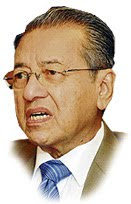
LONDON: Tun Dr Mahathir Mohamad has called for a ban on the manipulation of “money to make money” to help resolve the global financial crisis.
The former Prime Minister said the main problem was that banks were empowered to create money out of thin air and lend money which they did not have.
He suggested that everyone should go back to producing goods and services although the profits would not be that massive.
“But the wealth from these activities will be real and the economy will be more sound,” he said in his talk at the “Leadership in Times of Crisis” seminar at the British Institute of Technology and E-Commerce here on Friday.
Dr Mahathir also expressed doubts of a recovery despite the US government talking of a trillion-dollar plan to save the economy.
He said there would come a time when the government would have to admit that the whole system had failed.
What was needed, he said, was a total write-off of the monies lost and the need to reduce the lavish lifestyles and per capita income in rich countries.
“The rich will have to sell their yachts and private planes as well as their holiday and palatial homes while the poor will become poorer,” he said.
If there is to be recovery, the world must accept that everyone – the rich and the poor – must take part in formulating a change in the system, he added.
Dr Mahathir said the most important reform was to ensure that money was created by governments and not by banks.
“Governments need to come back and supervise the banks. If the executives go beyond something, they’ll be punished,” he said.
He described as ridiculous the present system where executives were paid bonuses if they could show figures to their directors even if the banks lose money.
Describing the scenario as frightening, he said: “We have no control over money and we don’t know how much of it is in circulation.”
Dr Mahathir said when Malaysia was hit by currency speculators in 1997-1998, it was told that the trade in currencies was 20 times bigger than the total world trade.
“That’s a huge sum of money. But where does it come from?” he said, adding it was important to get rid of those who were playing tricks.
He also said government bailouts, which were effectively nationalisation, would not enable businesses to recover when the economy was in recession.
“We see governments furiously bailing out financial institutions and businesses but we have yet to see any results,” he added.
He also said the formulation of any new system must involve both the rich and poor countries as well as elements of Islamic banking principles.
Dr M: Stop banks from making money out of thin air
By CHOI TUCK WO
LONDON: Tun Dr Mahathir Mohamad has called for a ban on the manipulation of “money to make money” to help resolve the global financial crisis.
The former Prime Minister said the main problem was that banks were empowered to create money out of thin air and lend money which they did not have.
He suggested that everyone should go back to producing goods and services although the profits would not be that massive.
“But the wealth from these activities will be real and the economy will be more sound,” he said in his talk at the “Leadership in Times of Crisis” seminar at the British Institute of Technology and E-Commerce here on Friday.
Dr Mahathir also expressed doubts of a recovery despite the US government talking of a trillion-dollar plan to save the economy.
He said there would come a time when the government would have to admit that the whole system had failed.
What was needed, he said, was a total write-off of the monies lost and the need to reduce the lavish lifestyles and per capita income in rich countries.
“The rich will have to sell their yachts and private planes as well as their holiday and palatial homes while the poor will become poorer,” he said.
If there is to be recovery, the world must accept that everyone – the rich and the poor – must take part in formulating a change in the system, he added.
Dr Mahathir said the most important reform was to ensure that money was created by governments and not by banks.
“Governments need to come back and supervise the banks. If the executives go beyond something, they’ll be punished,” he said.
He described as ridiculous the present system where executives were paid bonuses if they could show figures to their directors even if the banks lose money.
Describing the scenario as frightening, he said: “We have no control over money and we don’t know how much of it is in circulation.”
Dr Mahathir said when Malaysia was hit by currency speculators in 1997-1998, it was told that the trade in currencies was 20 times bigger than the total world trade.
“That’s a huge sum of money. But where does it come from?” he said, adding it was important to get rid of those who were playing tricks.
He also said government bailouts, which were effectively nationalisation, would not enable businesses to recover when the economy was in recession.
“We see governments furiously bailing out financial institutions and businesses but we have yet to see any results,” he added.
He also said the formulation of any new system must involve both the rich and poor countries as well as elements of Islamic banking principles.
Gold, silver prices rise as investors hunker down
Gold, silver prices rise as investors hunker down
NEW YORK: The only commodities shining on Friday were precious metals as investors fled riskier assets in search of safety.
The price of gold broke above $1,000 Friday for the first time in nearly a year as the Dow Jones industrial average plunged 100 points. Gold has surged 48 percent over the past four months.
The April gold contract rose as high as $1,007.70 an ounce Friday on the New York Mercantile Exchange before settling up $25.70 at $1,002.20. It finished up 6 percent for the week.
March silver rose 5.55 cents to finish at $14.49 an ounce - also up 6 percent compared to last week's levels.
But May copper fell 5.5 cents to close at $1.433 a pound, and finished down 6 percent for the week. Copper is considered an industrial metal.
Energy prices fell, too, as anxieties about the economy escalated.
Investors are nervous that if the recession is prolonged, individuals and businesses around the world will keep reining in their energy use.
Crude oil for March delivery expired Friday after falling 54 cents to settle at $38.94 on the New York Mercantile Exchange.
It still ended up 4 percent for the week, however.
April crude fell 15 cents on Friday to settle at $40.03 a barrel.
Gasoline futures fell 2.4 cents to settle at $1.0746 a gallon.
Heating oil dropped less than a penny to finish at $1.1967 a gallon. Natural gas for March delivery slid 7.6 cents to close at $4.01 per 1,000 cubic feet.
Grain prices also declined.
On the Chicago Board of Trade, wheat for March delivery slipped 0.25 cent to $5.1925 a bushel, March corn shed 3 cents to $3.5025 a bushel, and March soybeans sank 22 cents to $8.625 a bushel.
Meanwhile in New York: "Even the experts don't quite know what's going on."
Speaking to a number of those experts Friday, Paul Volcker, a top economic adviser to President Barack Obama, cited not only the lack of understanding of the global financial meltdown but the "shocking" speed with which it had spread across the world.
"One year ago, we would have said things were tough in the United States, but the rest of the world was holding up," Volcker told a conference featuring Nobel laureates, economists and investors at Columbia University in New York.
"The rest of the world has not held up."
In fact, the 81-year-old former chairman of the Federal Reserve said, "I don't remember any time, maybe even the Great Depression, when things went down quite so fast."
He noted that industrial production is falling in countries across the globe faster than in the U.S., one result of the decline caused by the breakdown of unbridled financial markets that operated on a global scale.
"It's broken down in the face of almost all expectation and prediction," he noted.
Volcker didn't offer specifics on how long he thinks the recession will last or what will help start a recovery.
But he predicted there will be some lasting lessons from the experience.
"I don't believe it will be forgotten ... and we will revert to the kind of financial system we had before the crisis," he said.
While he assured his audience of his confidence that capitalism will survive, Volcker said stronger regulations are needed to protect the world economy from such future shocks.
And he said he is concerned about the amount of power central banks, treasuries and regulatory agencies have acquired while trying to contain the meltdown.
"It is evident in the United States, and not just in the United States, the central bank is taking on a role that is way beyond what a central bank should be taking," he said.
Volcker stressed the importance of international cooperation in creating a new regulatory framework, particularly for major banks that operate across national boundaries - the reverse of what's happened in recent years.
"The more international agreement we have on where we want to get to, the better off we'll be," Volcker said.
And while major banks should be more tightly controlled and less able to make the sort of risky bets that led to their current debacle, Volcker said there should also be more oversight of some kind for hedge funds, equity funds and the remaining investment banks.
He scoffed at the notion that those entities must be free to innovate - stating that financial "innovations" like asset backed securities and credit default swaps have brought few benefits.
The most important "innovation" in banking for most people in the last 20 or 30 years, he maintained, is the automatic teller machine.
Latest NYSE, NASDAQ and other business news, from AP-Wire
For latest Bursa Malaysia indices, charts and other information click here
New York Stock Exchange:
http://www.nyse.com
Nasdaq Stock Market:
http://www.nasdaq.com
For Tokyo Stock Exchange click here
Ads by Google
Forex- Gold Market Price
Enjoy the Drastic Changes in Gold Price. Low Spread for Gold Trading!
www.Easy-Forex.com
Financial Market
Free Trial to Emerging Markets Analysis & Forecasts Online
www.businessmonitor.com/Financial
M-State Gold Supplement
Liquid Alchemy Monatomic Gold-Au w/ Indium for energy & super-wellness.
www.cancerchoices.com
NEW YORK: The only commodities shining on Friday were precious metals as investors fled riskier assets in search of safety.
The price of gold broke above $1,000 Friday for the first time in nearly a year as the Dow Jones industrial average plunged 100 points. Gold has surged 48 percent over the past four months.
The April gold contract rose as high as $1,007.70 an ounce Friday on the New York Mercantile Exchange before settling up $25.70 at $1,002.20. It finished up 6 percent for the week.
March silver rose 5.55 cents to finish at $14.49 an ounce - also up 6 percent compared to last week's levels.
But May copper fell 5.5 cents to close at $1.433 a pound, and finished down 6 percent for the week. Copper is considered an industrial metal.
Energy prices fell, too, as anxieties about the economy escalated.
Investors are nervous that if the recession is prolonged, individuals and businesses around the world will keep reining in their energy use.
Crude oil for March delivery expired Friday after falling 54 cents to settle at $38.94 on the New York Mercantile Exchange.
It still ended up 4 percent for the week, however.
April crude fell 15 cents on Friday to settle at $40.03 a barrel.
Gasoline futures fell 2.4 cents to settle at $1.0746 a gallon.
Heating oil dropped less than a penny to finish at $1.1967 a gallon. Natural gas for March delivery slid 7.6 cents to close at $4.01 per 1,000 cubic feet.
Grain prices also declined.
On the Chicago Board of Trade, wheat for March delivery slipped 0.25 cent to $5.1925 a bushel, March corn shed 3 cents to $3.5025 a bushel, and March soybeans sank 22 cents to $8.625 a bushel.
Meanwhile in New York: "Even the experts don't quite know what's going on."
Speaking to a number of those experts Friday, Paul Volcker, a top economic adviser to President Barack Obama, cited not only the lack of understanding of the global financial meltdown but the "shocking" speed with which it had spread across the world.
"One year ago, we would have said things were tough in the United States, but the rest of the world was holding up," Volcker told a conference featuring Nobel laureates, economists and investors at Columbia University in New York.
"The rest of the world has not held up."
In fact, the 81-year-old former chairman of the Federal Reserve said, "I don't remember any time, maybe even the Great Depression, when things went down quite so fast."
He noted that industrial production is falling in countries across the globe faster than in the U.S., one result of the decline caused by the breakdown of unbridled financial markets that operated on a global scale.
"It's broken down in the face of almost all expectation and prediction," he noted.
Volcker didn't offer specifics on how long he thinks the recession will last or what will help start a recovery.
But he predicted there will be some lasting lessons from the experience.
"I don't believe it will be forgotten ... and we will revert to the kind of financial system we had before the crisis," he said.
While he assured his audience of his confidence that capitalism will survive, Volcker said stronger regulations are needed to protect the world economy from such future shocks.
And he said he is concerned about the amount of power central banks, treasuries and regulatory agencies have acquired while trying to contain the meltdown.
"It is evident in the United States, and not just in the United States, the central bank is taking on a role that is way beyond what a central bank should be taking," he said.
Volcker stressed the importance of international cooperation in creating a new regulatory framework, particularly for major banks that operate across national boundaries - the reverse of what's happened in recent years.
"The more international agreement we have on where we want to get to, the better off we'll be," Volcker said.
And while major banks should be more tightly controlled and less able to make the sort of risky bets that led to their current debacle, Volcker said there should also be more oversight of some kind for hedge funds, equity funds and the remaining investment banks.
He scoffed at the notion that those entities must be free to innovate - stating that financial "innovations" like asset backed securities and credit default swaps have brought few benefits.
The most important "innovation" in banking for most people in the last 20 or 30 years, he maintained, is the automatic teller machine.
Latest NYSE, NASDAQ and other business news, from AP-Wire
For latest Bursa Malaysia indices, charts and other information click here
New York Stock Exchange:
http://www.nyse.com
Nasdaq Stock Market:
http://www.nasdaq.com
For Tokyo Stock Exchange click here
Ads by Google
Forex- Gold Market Price
Enjoy the Drastic Changes in Gold Price. Low Spread for Gold Trading!
www.Easy-Forex.com
Financial Market
Free Trial to Emerging Markets Analysis & Forecasts Online
www.businessmonitor.com/Financial
M-State Gold Supplement
Liquid Alchemy Monatomic Gold-Au w/ Indium for energy & super-wellness.
www.cancerchoices.com
NEW YORK: The only commodities shining on Friday were precious metals as investors fled riskier assets in search of safety.
The price of gold broke above $1,000 Friday for the first time in nearly a year as the Dow Jones industrial average plunged 100 points. Gold has surged 48 percent over the past four months.
The April gold contract rose as high as $1,007.70 an ounce Friday on the New York Mercantile Exchange before settling up $25.70 at $1,002.20. It finished up 6 percent for the week.
March silver rose 5.55 cents to finish at $14.49 an ounce - also up 6 percent compared to last week's levels.
But May copper fell 5.5 cents to close at $1.433 a pound, and finished down 6 percent for the week. Copper is considered an industrial metal.
Energy prices fell, too, as anxieties about the economy escalated.
Investors are nervous that if the recession is prolonged, individuals and businesses around the world will keep reining in their energy use.
Crude oil for March delivery expired Friday after falling 54 cents to settle at $38.94 on the New York Mercantile Exchange.
It still ended up 4 percent for the week, however.
April crude fell 15 cents on Friday to settle at $40.03 a barrel.
Gasoline futures fell 2.4 cents to settle at $1.0746 a gallon.
Heating oil dropped less than a penny to finish at $1.1967 a gallon. Natural gas for March delivery slid 7.6 cents to close at $4.01 per 1,000 cubic feet.
Grain prices also declined.
On the Chicago Board of Trade, wheat for March delivery slipped 0.25 cent to $5.1925 a bushel, March corn shed 3 cents to $3.5025 a bushel, and March soybeans sank 22 cents to $8.625 a bushel.
Meanwhile in New York: "Even the experts don't quite know what's going on."
Speaking to a number of those experts Friday, Paul Volcker, a top economic adviser to President Barack Obama, cited not only the lack of understanding of the global financial meltdown but the "shocking" speed with which it had spread across the world.
"One year ago, we would have said things were tough in the United States, but the rest of the world was holding up," Volcker told a conference featuring Nobel laureates, economists and investors at Columbia University in New York.
"The rest of the world has not held up."
In fact, the 81-year-old former chairman of the Federal Reserve said, "I don't remember any time, maybe even the Great Depression, when things went down quite so fast."
He noted that industrial production is falling in countries across the globe faster than in the U.S., one result of the decline caused by the breakdown of unbridled financial markets that operated on a global scale.
"It's broken down in the face of almost all expectation and prediction," he noted.
Volcker didn't offer specifics on how long he thinks the recession will last or what will help start a recovery.
But he predicted there will be some lasting lessons from the experience.
"I don't believe it will be forgotten ... and we will revert to the kind of financial system we had before the crisis," he said.
While he assured his audience of his confidence that capitalism will survive, Volcker said stronger regulations are needed to protect the world economy from such future shocks.
And he said he is concerned about the amount of power central banks, treasuries and regulatory agencies have acquired while trying to contain the meltdown.
"It is evident in the United States, and not just in the United States, the central bank is taking on a role that is way beyond what a central bank should be taking," he said.
Volcker stressed the importance of international cooperation in creating a new regulatory framework, particularly for major banks that operate across national boundaries - the reverse of what's happened in recent years.
"The more international agreement we have on where we want to get to, the better off we'll be," Volcker said.
And while major banks should be more tightly controlled and less able to make the sort of risky bets that led to their current debacle, Volcker said there should also be more oversight of some kind for hedge funds, equity funds and the remaining investment banks.
He scoffed at the notion that those entities must be free to innovate - stating that financial "innovations" like asset backed securities and credit default swaps have brought few benefits.
The most important "innovation" in banking for most people in the last 20 or 30 years, he maintained, is the automatic teller machine.
NEW YORK: The only commodities shining on Friday were precious metals as investors fled riskier assets in search of safety.
The price of gold broke above $1,000 Friday for the first time in nearly a year as the Dow Jones industrial average plunged 100 points. Gold has surged 48 percent over the past four months.
The April gold contract rose as high as $1,007.70 an ounce Friday on the New York Mercantile Exchange before settling up $25.70 at $1,002.20. It finished up 6 percent for the week.
March silver rose 5.55 cents to finish at $14.49 an ounce - also up 6 percent compared to last week's levels.
But May copper fell 5.5 cents to close at $1.433 a pound, and finished down 6 percent for the week. Copper is considered an industrial metal.
Energy prices fell, too, as anxieties about the economy escalated.
Investors are nervous that if the recession is prolonged, individuals and businesses around the world will keep reining in their energy use.
Crude oil for March delivery expired Friday after falling 54 cents to settle at $38.94 on the New York Mercantile Exchange.
It still ended up 4 percent for the week, however.
April crude fell 15 cents on Friday to settle at $40.03 a barrel.
Gasoline futures fell 2.4 cents to settle at $1.0746 a gallon.
Heating oil dropped less than a penny to finish at $1.1967 a gallon. Natural gas for March delivery slid 7.6 cents to close at $4.01 per 1,000 cubic feet.
Grain prices also declined.
On the Chicago Board of Trade, wheat for March delivery slipped 0.25 cent to $5.1925 a bushel, March corn shed 3 cents to $3.5025 a bushel, and March soybeans sank 22 cents to $8.625 a bushel.
Meanwhile in New York: "Even the experts don't quite know what's going on."
Speaking to a number of those experts Friday, Paul Volcker, a top economic adviser to President Barack Obama, cited not only the lack of understanding of the global financial meltdown but the "shocking" speed with which it had spread across the world.
"One year ago, we would have said things were tough in the United States, but the rest of the world was holding up," Volcker told a conference featuring Nobel laureates, economists and investors at Columbia University in New York.
"The rest of the world has not held up."
In fact, the 81-year-old former chairman of the Federal Reserve said, "I don't remember any time, maybe even the Great Depression, when things went down quite so fast."
He noted that industrial production is falling in countries across the globe faster than in the U.S., one result of the decline caused by the breakdown of unbridled financial markets that operated on a global scale.
"It's broken down in the face of almost all expectation and prediction," he noted.
Volcker didn't offer specifics on how long he thinks the recession will last or what will help start a recovery.
But he predicted there will be some lasting lessons from the experience.
"I don't believe it will be forgotten ... and we will revert to the kind of financial system we had before the crisis," he said.
While he assured his audience of his confidence that capitalism will survive, Volcker said stronger regulations are needed to protect the world economy from such future shocks.
And he said he is concerned about the amount of power central banks, treasuries and regulatory agencies have acquired while trying to contain the meltdown.
"It is evident in the United States, and not just in the United States, the central bank is taking on a role that is way beyond what a central bank should be taking," he said.
Volcker stressed the importance of international cooperation in creating a new regulatory framework, particularly for major banks that operate across national boundaries - the reverse of what's happened in recent years.
"The more international agreement we have on where we want to get to, the better off we'll be," Volcker said.
And while major banks should be more tightly controlled and less able to make the sort of risky bets that led to their current debacle, Volcker said there should also be more oversight of some kind for hedge funds, equity funds and the remaining investment banks.
He scoffed at the notion that those entities must be free to innovate - stating that financial "innovations" like asset backed securities and credit default swaps have brought few benefits.
The most important "innovation" in banking for most people in the last 20 or 30 years, he maintained, is the automatic teller machine.
Latest NYSE, NASDAQ and other business news, from AP-Wire
For latest Bursa Malaysia indices, charts and other information click here
New York Stock Exchange:
http://www.nyse.com
Nasdaq Stock Market:
http://www.nasdaq.com
For Tokyo Stock Exchange click here
Ads by Google
Forex- Gold Market Price
Enjoy the Drastic Changes in Gold Price. Low Spread for Gold Trading!
www.Easy-Forex.com
Financial Market
Free Trial to Emerging Markets Analysis & Forecasts Online
www.businessmonitor.com/Financial
M-State Gold Supplement
Liquid Alchemy Monatomic Gold-Au w/ Indium for energy & super-wellness.
www.cancerchoices.com
NEW YORK: The only commodities shining on Friday were precious metals as investors fled riskier assets in search of safety.
The price of gold broke above $1,000 Friday for the first time in nearly a year as the Dow Jones industrial average plunged 100 points. Gold has surged 48 percent over the past four months.
The April gold contract rose as high as $1,007.70 an ounce Friday on the New York Mercantile Exchange before settling up $25.70 at $1,002.20. It finished up 6 percent for the week.
March silver rose 5.55 cents to finish at $14.49 an ounce - also up 6 percent compared to last week's levels.
But May copper fell 5.5 cents to close at $1.433 a pound, and finished down 6 percent for the week. Copper is considered an industrial metal.
Energy prices fell, too, as anxieties about the economy escalated.
Investors are nervous that if the recession is prolonged, individuals and businesses around the world will keep reining in their energy use.
Crude oil for March delivery expired Friday after falling 54 cents to settle at $38.94 on the New York Mercantile Exchange.
It still ended up 4 percent for the week, however.
April crude fell 15 cents on Friday to settle at $40.03 a barrel.
Gasoline futures fell 2.4 cents to settle at $1.0746 a gallon.
Heating oil dropped less than a penny to finish at $1.1967 a gallon. Natural gas for March delivery slid 7.6 cents to close at $4.01 per 1,000 cubic feet.
Grain prices also declined.
On the Chicago Board of Trade, wheat for March delivery slipped 0.25 cent to $5.1925 a bushel, March corn shed 3 cents to $3.5025 a bushel, and March soybeans sank 22 cents to $8.625 a bushel.
Meanwhile in New York: "Even the experts don't quite know what's going on."
Speaking to a number of those experts Friday, Paul Volcker, a top economic adviser to President Barack Obama, cited not only the lack of understanding of the global financial meltdown but the "shocking" speed with which it had spread across the world.
"One year ago, we would have said things were tough in the United States, but the rest of the world was holding up," Volcker told a conference featuring Nobel laureates, economists and investors at Columbia University in New York.
"The rest of the world has not held up."
In fact, the 81-year-old former chairman of the Federal Reserve said, "I don't remember any time, maybe even the Great Depression, when things went down quite so fast."
He noted that industrial production is falling in countries across the globe faster than in the U.S., one result of the decline caused by the breakdown of unbridled financial markets that operated on a global scale.
"It's broken down in the face of almost all expectation and prediction," he noted.
Volcker didn't offer specifics on how long he thinks the recession will last or what will help start a recovery.
But he predicted there will be some lasting lessons from the experience.
"I don't believe it will be forgotten ... and we will revert to the kind of financial system we had before the crisis," he said.
While he assured his audience of his confidence that capitalism will survive, Volcker said stronger regulations are needed to protect the world economy from such future shocks.
And he said he is concerned about the amount of power central banks, treasuries and regulatory agencies have acquired while trying to contain the meltdown.
"It is evident in the United States, and not just in the United States, the central bank is taking on a role that is way beyond what a central bank should be taking," he said.
Volcker stressed the importance of international cooperation in creating a new regulatory framework, particularly for major banks that operate across national boundaries - the reverse of what's happened in recent years.
"The more international agreement we have on where we want to get to, the better off we'll be," Volcker said.
And while major banks should be more tightly controlled and less able to make the sort of risky bets that led to their current debacle, Volcker said there should also be more oversight of some kind for hedge funds, equity funds and the remaining investment banks.
He scoffed at the notion that those entities must be free to innovate - stating that financial "innovations" like asset backed securities and credit default swaps have brought few benefits.
The most important "innovation" in banking for most people in the last 20 or 30 years, he maintained, is the automatic teller machine.
Latest NYSE, NASDAQ and other business news, from AP-Wire
For latest Bursa Malaysia indices, charts and other information click here
New York Stock Exchange:
http://www.nyse.com
Nasdaq Stock Market:
http://www.nasdaq.com
For Tokyo Stock Exchange click here
Ads by Google
Forex- Gold Market Price
Enjoy the Drastic Changes in Gold Price. Low Spread for Gold Trading!
www.Easy-Forex.com
Financial Market
Free Trial to Emerging Markets Analysis & Forecasts Online
www.businessmonitor.com/Financial
M-State Gold Supplement
Liquid Alchemy Monatomic Gold-Au w/ Indium for energy & super-wellness.
www.cancerchoices.com
NEW YORK: The only commodities shining on Friday were precious metals as investors fled riskier assets in search of safety.
The price of gold broke above $1,000 Friday for the first time in nearly a year as the Dow Jones industrial average plunged 100 points. Gold has surged 48 percent over the past four months.
The April gold contract rose as high as $1,007.70 an ounce Friday on the New York Mercantile Exchange before settling up $25.70 at $1,002.20. It finished up 6 percent for the week.
March silver rose 5.55 cents to finish at $14.49 an ounce - also up 6 percent compared to last week's levels.
But May copper fell 5.5 cents to close at $1.433 a pound, and finished down 6 percent for the week. Copper is considered an industrial metal.
Energy prices fell, too, as anxieties about the economy escalated.
Investors are nervous that if the recession is prolonged, individuals and businesses around the world will keep reining in their energy use.
Crude oil for March delivery expired Friday after falling 54 cents to settle at $38.94 on the New York Mercantile Exchange.
It still ended up 4 percent for the week, however.
April crude fell 15 cents on Friday to settle at $40.03 a barrel.
Gasoline futures fell 2.4 cents to settle at $1.0746 a gallon.
Heating oil dropped less than a penny to finish at $1.1967 a gallon. Natural gas for March delivery slid 7.6 cents to close at $4.01 per 1,000 cubic feet.
Grain prices also declined.
On the Chicago Board of Trade, wheat for March delivery slipped 0.25 cent to $5.1925 a bushel, March corn shed 3 cents to $3.5025 a bushel, and March soybeans sank 22 cents to $8.625 a bushel.
Meanwhile in New York: "Even the experts don't quite know what's going on."
Speaking to a number of those experts Friday, Paul Volcker, a top economic adviser to President Barack Obama, cited not only the lack of understanding of the global financial meltdown but the "shocking" speed with which it had spread across the world.
"One year ago, we would have said things were tough in the United States, but the rest of the world was holding up," Volcker told a conference featuring Nobel laureates, economists and investors at Columbia University in New York.
"The rest of the world has not held up."
In fact, the 81-year-old former chairman of the Federal Reserve said, "I don't remember any time, maybe even the Great Depression, when things went down quite so fast."
He noted that industrial production is falling in countries across the globe faster than in the U.S., one result of the decline caused by the breakdown of unbridled financial markets that operated on a global scale.
"It's broken down in the face of almost all expectation and prediction," he noted.
Volcker didn't offer specifics on how long he thinks the recession will last or what will help start a recovery.
But he predicted there will be some lasting lessons from the experience.
"I don't believe it will be forgotten ... and we will revert to the kind of financial system we had before the crisis," he said.
While he assured his audience of his confidence that capitalism will survive, Volcker said stronger regulations are needed to protect the world economy from such future shocks.
And he said he is concerned about the amount of power central banks, treasuries and regulatory agencies have acquired while trying to contain the meltdown.
"It is evident in the United States, and not just in the United States, the central bank is taking on a role that is way beyond what a central bank should be taking," he said.
Volcker stressed the importance of international cooperation in creating a new regulatory framework, particularly for major banks that operate across national boundaries - the reverse of what's happened in recent years.
"The more international agreement we have on where we want to get to, the better off we'll be," Volcker said.
And while major banks should be more tightly controlled and less able to make the sort of risky bets that led to their current debacle, Volcker said there should also be more oversight of some kind for hedge funds, equity funds and the remaining investment banks.
He scoffed at the notion that those entities must be free to innovate - stating that financial "innovations" like asset backed securities and credit default swaps have brought few benefits.
The most important "innovation" in banking for most people in the last 20 or 30 years, he maintained, is the automatic teller machine.
Subscribe to:
Posts (Atom)